

To Be With Her, I Would Have to Be Him
And this is where it is tricky, because this often results in a revelation of the unhappiness of the person who had the affair, and that then goes directly to, “So it’s my fault you did this to me.” (It’s not.) What is it about this moment that is so hard to sit in? Why does “you’re part of the context that brought me here” go so quickly to “you’re to blame?” I think it’s because betrayal contains survival information.
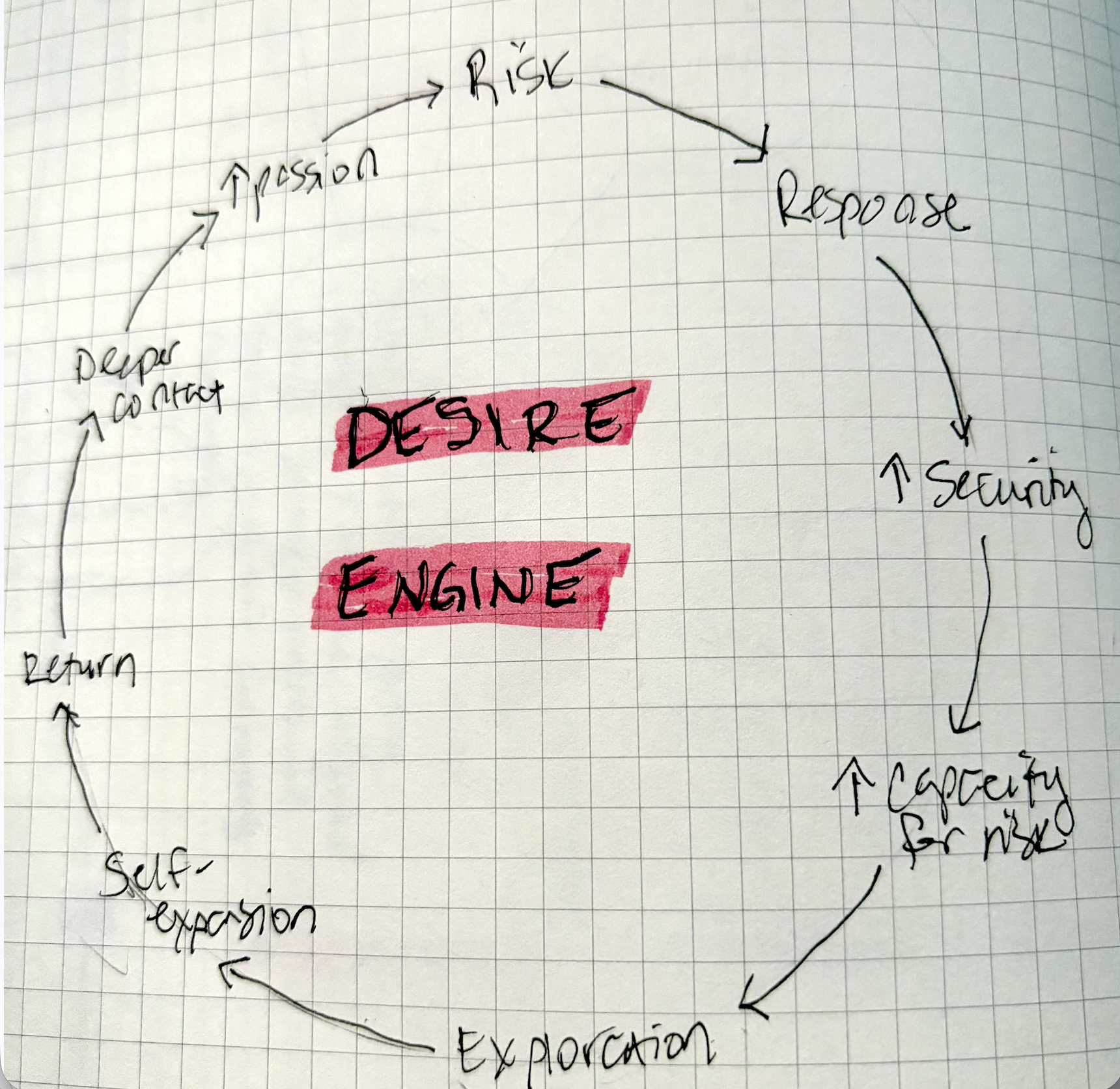
The Secure Base is for Leaving
Betrayal makes us less likely to risk yielding to another. Safety makes it more likely that we will, and crucially that we perceive that we can. When we feel safe with someone, we spend less energy monitoring threat, defending against loss, and calculating whether we can afford a risk. That freed up capacity doesn’t disappear, so what happens to it?

Marketing hurts my feelings
Frustrating is too small a word for this platform-building game I’m playing. Condense it, make it smaller, make it the pop chips version of what you’re saying. A snack, edible in seconds, gone in less. I don’t want it to be gone, I want it to live forever, because what I am trying to say is immortal.

Safety is not the whole story
This safety is what people come to couple therapy asking for. We want to stop fighting, stop feeling disconnected, stop the endless conflict between us. Stage 1 of Emotionally Focused Couple Therapy has the same goal, so therapy at the beginning mostly feels aligned with what the couple came in for. Not fully, as most also seem to want some arbitration of whatever the fights are about, so there’s often a bit of reframing at the beginning to talk about the process (how we talk) instead of the content (what we talk about). But even so, buy-in is there: everyone wants to establish safety.
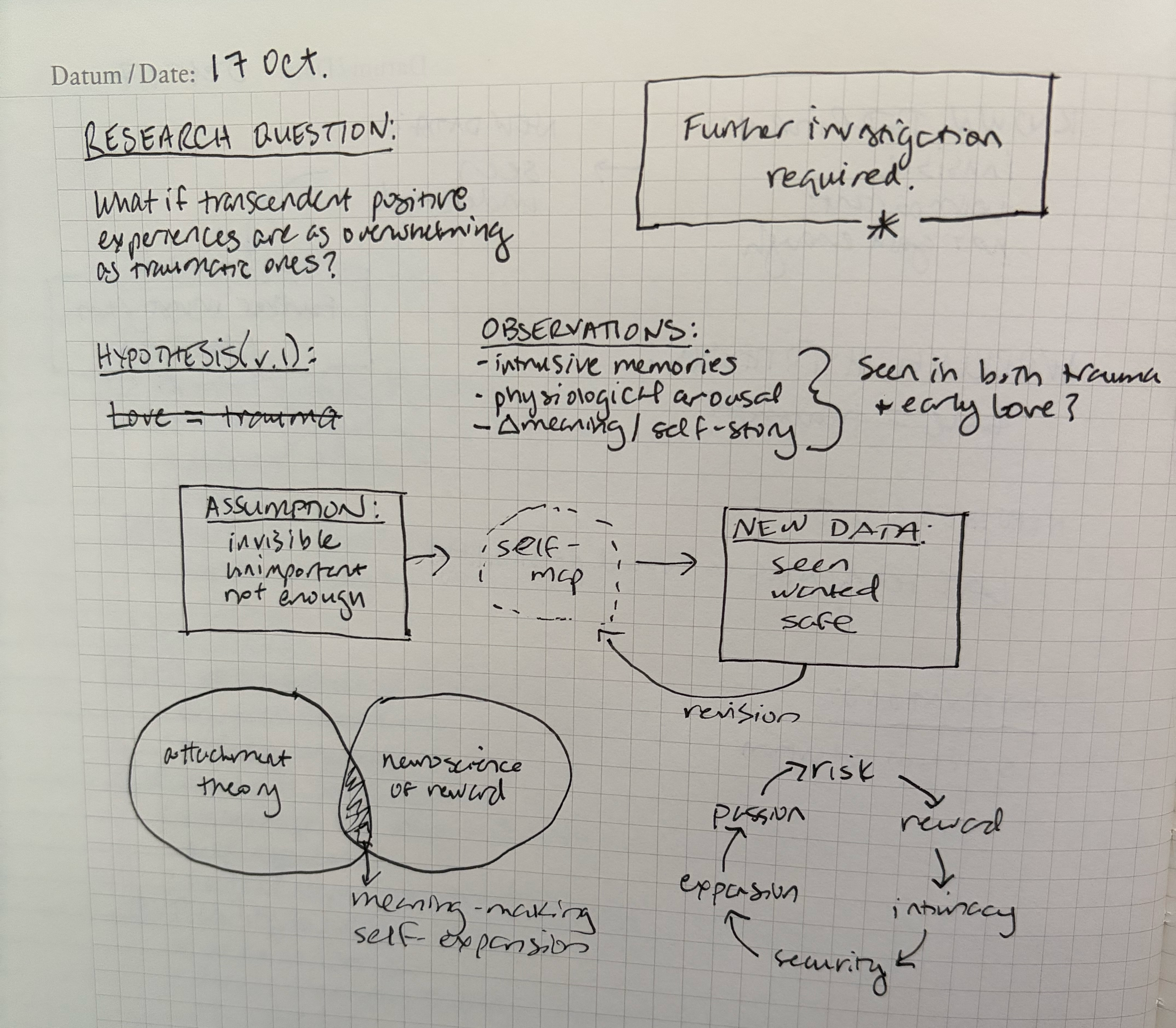
You might be wrong about everything
When I was in college, I met my longing.
I went on a date with a man named Adam, and something happened that I am still, decades later, not entirely sure how to describe.
We were in bed together, early enough in the relationship that everything was still new and slightly astonishing, and I had gone somewhere. Drifted, the way I sometimes did without quite knowing it, present in body but absent in some harder-to-name way. Dissociation is the clinical term, and I knew the term, because I was studying it. What I didn’t know, until that moment, was that someone could notice.
He asked me to open my eyes.